
Room Sharing Made Easy: A Safer Sleep Guide for Your Baby's First 6 Months
Those first sleepless weeks with a newborn can feel like a blur, and knowing your baby is safe while everyone gets some rest is every parent's priority. Room sharing, keeping your baby close in their own sleep space rather than in a separate room, is one of the simplest and most effective ways to support safer sleep. Here's what the guidance says, and how to make room sharing work for your family.
Why Room Sharing Matters in the First 6 Months
According to The Lullaby Trust, having your baby sleep in the same room as you, for every sleep, day and night, for at least the first 6 months is linked to a lower risk of Sudden Infant Death Syndrome (SIDS). Room sharing means your baby is close enough for you to hear and respond quickly to them, while still sleeping in their own separate, firm, flat sleep space, such as a cot, Moses basket, or bedside crib.
It's a small distinction with a big impact: room sharing is not the same as bed-sharing, and understanding the difference is one of the most reassuring things you can do as a new parent.
How to Set Up a Safer Sleep Space
The Core Safer Sleep Guidelines
UK safe sleep guidance, from both the Lullaby Trust and the NHS, centres on a few simple, evidence-based rules for every sleep:
- Always place your baby on their back to sleep.
- Keep the cot clear of pillows, toys, bumpers, and loose bedding.
- Maintain a room temperature of around 16 to 20 degrees Celsius.
- Use a firm, flat, waterproof mattress that fits the crib snugly.
- Room share for every sleep, day and night, for the first 6 months.
- Keep your baby's sleep environment completely smoke-free.
Choosing the Right Sleep Space
A separate sleep space that sits close to your bed gives you the reassurance of proximity without the increased risks associated with bed-sharing. This is especially worth considering if you're breastfeeding, recovering from a caesarean, or simply want to minimise how far you need to move for nighttime feeds and comforting.
How a Bedside Crib Makes Room Sharing Easier
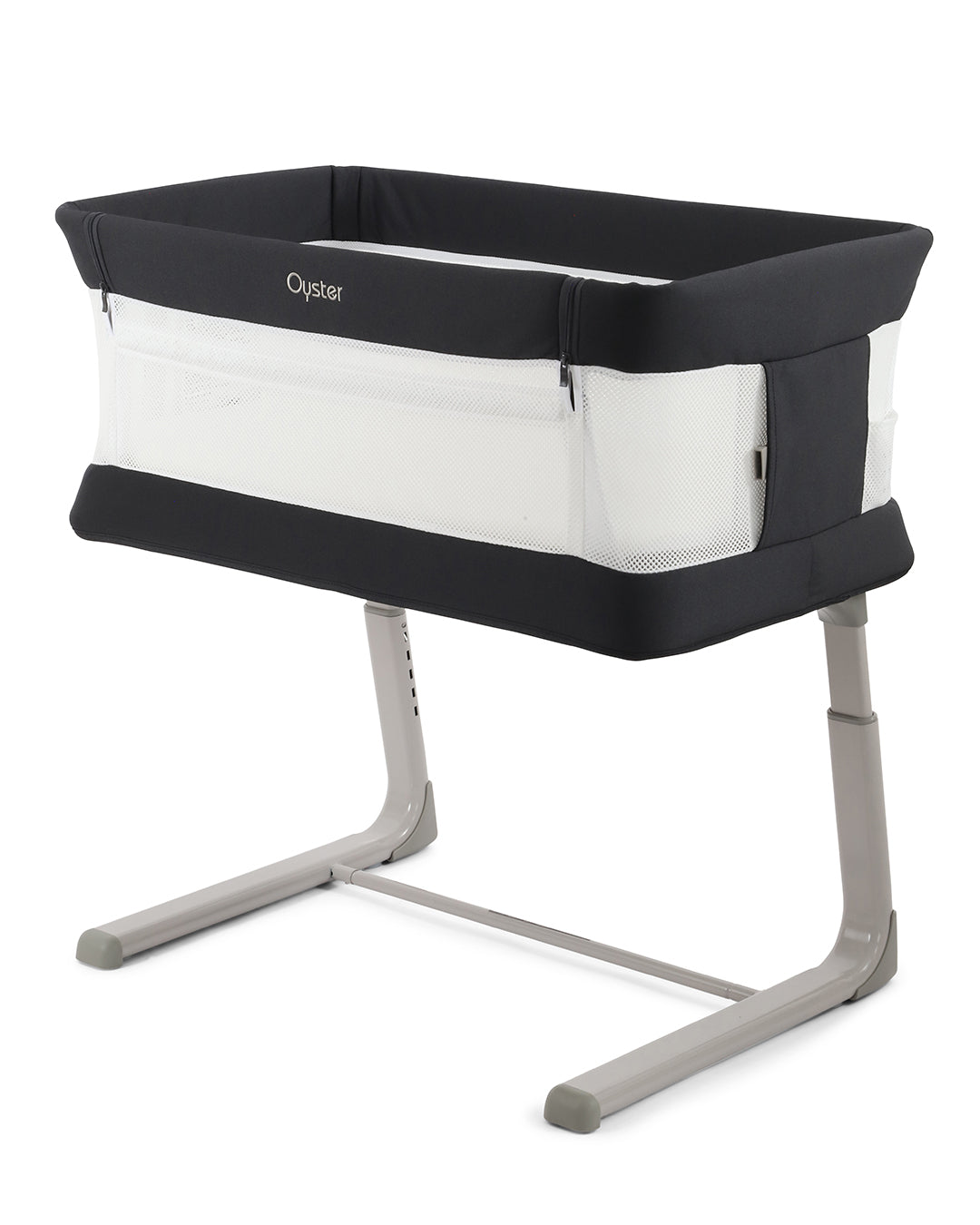
The Oyster Wiggle Crib Co-Sleeper is designed around exactly this principle: keeping your baby within arm's reach in their own dedicated sleep space. Suitable from birth to approximately 6 months (or 9kg), it features a drop-side panel that opens level with your mattress once securely tethered to your bed, making nighttime feeds and settling far easier without needing to get up.
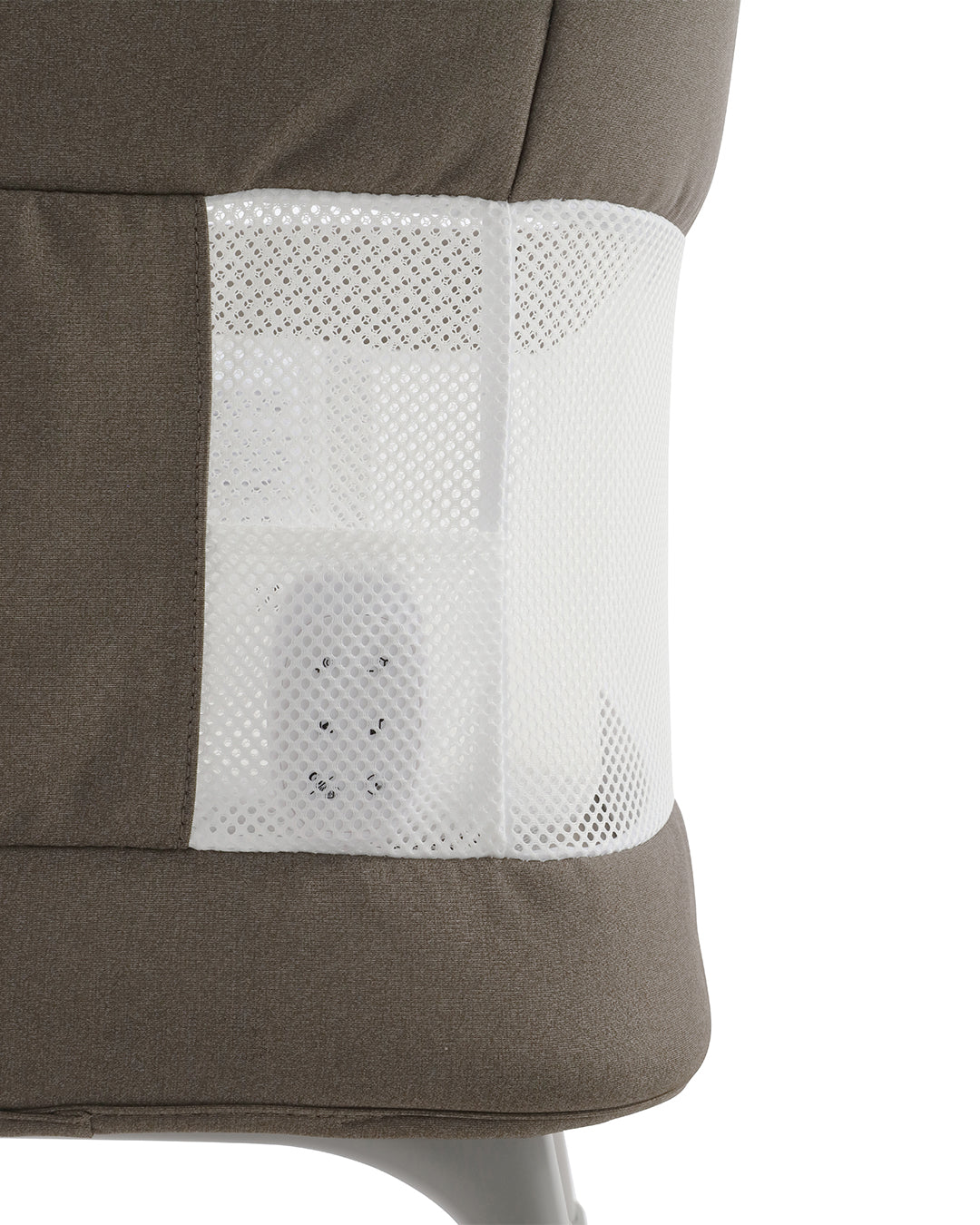
Beyond the co-sleeping function, the Wiggle Crib includes gentle motion detection that triggers soothing wiggle motions to help resettle your baby, six built-in tunes and two calming sounds, and five height positions so it adapts to different bed heights. The breathable mesh sides support airflow, and the whole crib can convert to a standalone bedside crib once you no longer need the drop-side function.
Settling Your Baby Beyond the Bedroom
Room sharing covers nighttime and naps in your room, but many families also want a safe, calming space for daytime naps downstairs. The Oyster Ocean Rocker offers gentle rocking and soothing settings for supervised daytime naps and quiet time, while the wider Oyster Nursery Furniture range can help you build out a consistent, calming sleep routine as your baby grows beyond the room sharing stage.
Common Room Sharing Mistakes to Avoid
- Adding soft bedding "for comfort." Keep the sleep space clear, even if it looks cosier with a blanket or cushion.
- Overheating the room. A room that's too warm, or too much bedding, increases risk. Stick to the recommended temperature range.
- Falling asleep on a sofa or armchair while feeding. This is one of the higher-risk sleep situations. If you think you might fall asleep, feed in bed with your baby in their own sleep space nearby, not in the adult bed.
- Not tethering a bedside crib correctly. Always follow the manufacturer's instructions closely to ensure the crib is securely and safely attached to your bed.
Frequently Asked Questions
How long should my baby room share with me?
The Lullaby Trust recommends room sharing with your baby, day and night, for at least the first 6 months, as this is linked to a lower risk of SIDS.
Is it safe to bring my baby into my bed?
Bed-sharing carries increased risk, particularly if you or your partner smoke, have been drinking alcohol, are extremely tired, or your baby was born prematurely or at a low birth weight. A bedside or co-sleeper crib lets your baby stay within arm's reach in their own separate sleep space, which is the safer option recommended by UK safe sleep guidance.
What is a bedside crib and how does it work?
A bedside crib, sometimes called a co-sleeper crib, attaches securely to the side of your bed using tethers, with a drop-side panel that opens level with your mattress. This keeps your baby close for nighttime feeds and comforting, in their own firm, flat sleep space.
What temperature should my baby's room be?
The Lullaby Trust recommends keeping your baby's room at a temperature of 16 to 20 degrees Celsius, with light bedding and no hats indoors, to reduce the risk of overheating.
When should my baby move to their own room?
Most safe sleep guidance recommends room sharing for at least the first 6 months. After this, many families gradually transition their baby to their own room, though every family's timeline will look a little different.


